Category: Blog

  • How Xfinity Hijacked My Peacock Account and Won’t Give It Back

    You know those promotions that sound like a great deal up front? Like, “Get Peacock Premium FREE with your Xfinity Internet!” Well, here’s a story about how that turned into a multi-year saga of account lockdown, circular support replies, and a total loss of control over a streaming account I created myself. It’s a warning, really, because what happened to me can happen to anyone who links an existing account to a “free” third-party promo.

    Before I ever signed up for Xfinity internet, I had a standalone Peacock account. Just a regular ol’ account, set up with my personal Gmail address. Paid for it myself, no bundles, no complications. It was mine, and I could manage it however I liked, upgrade, downgrade, cancel, whatever.

    Then I switched to Xfinity for internet. Like most internet providers these days, they had some streaming promo thrown in. “Free Peacock Premium!” they said. “Just link your account!” And I did. Why not? I already had the account, might as well save a few bucks.

    Well, that’s when everything went sideways.

    The Lock-In: I Lost Control of My Own Account

    Peacock launched in 2020 with a tiered subscription model that confused a lot of people right out of the gate. The base tier, simply called Peacock Free, offered a limited selection of shows and movies with advertisements. Then came Peacock Premium, which opened up the full content library but still included ads. This was followed by Peacock Premium Plus, which is the only tier that offers truly ad-free streaming, aside from some exceptions like live sports or certain programming.

    The problem is that the name “Premium” implies an ad-free experience, and for many subscribers, especially those coming in through promotions like the Xfinity deal, that misunderstanding created a major disappointment. Xfinity’s included offer was only for Peacock Premium, the tier that still runs ads (and there’s little more in life that I despise more than TV ads). If you want to upgrade to Premium Plus, the actual ad-free version, you have to pay a little more. That’s how it works for standalone users, anyway. But once Xfinity inserts itself into the billing relationship, that upgrade option disappears completely.

    It’s a trap disguised as a perk.

    Once I linked my existing Peacock account to Xfinity, something changed. Quietly, behind the scenes, Xfinity became the billing owner of my account. This might sound minor, but it’s a big deal.

    Suddenly, I couldn’t change my subscription anymore. No upgrades. No downgrades. No billing access. Want to go ad-free and get Peacock Premium Plus? Nope. That button is gone. Instead, you’re met with a little message:

    “To make changes to your plan or cancel your subscription, please visit the Xfinity subscription manager on your Xfinity device.”

    Peacock account section showing plan locked through Xfinity

    Okay, fine. So I go to my Xfinity account. But here’s the kicker, I’m an Internet-only customer, not cable TV. That means I don’t have access to the streaming subscription management tools Xfinity offers to their cable subscribers. There’s literally no section for me to manage Peacock.

    So now I’m stuck. Peacock tells me to talk to Xfinity. Xfinity tells me to talk to Peacock. Neither of them will help. I’ve contacted both multiple times over the past few years. Every time, it’s the same excuse: “Sorry, there’s nothing we can do, call the other company”

    While this may seem like a “me” problem, a quick search on Google shows how widespread this issue has become, and for how long. This has been happening to people all over the country, agitated customers who signed up for Peacock through Xfinity’s “included” promotions and expected to have the same level of control they had before linking accounts. There are entire threads on Reddit full of people sharing the exact same story. They link their existing Peacock account to Xfinity to redeem the offer, only to find they can’t upgrade to Premium Plus, can’t cancel, and can’t manage billing at all. When they contact Peacock, they’re told to speak to Xfinity. When they reach out to Xfinity, they’re told to manage it through the Peacock website.  And the circle goes on.

    Xfinity’s own community forums are filled with frustrated users looking for answers. The support reps in those forums acknowledge the issue but offer no real solution. I suspect that most responses are from support bots based on how repetitive and unhelpful their replies are. Some users have tried everything from removing devices to signing up for Xfinity Flex, hoping it would unlock streaming account controls, but nothing works. Internet-only customers are especially stuck, because they don’t have access to the streaming dashboard that cable subscribers do.

    The most common suggestion people are given is to create a new Peacock account with a different email and start over. That’s not a fix, it’s a workaround that continues to hold the original account hostage. People lose their profiles, watch history, saved lists, and any sense of continuity, just because Xfinity refuses to release control over an account that was never theirs to begin with. Some have even waited out the promotion, thinking it might expire, only to find it extended automatically. There are users who have been trying to resolve this for more than two years, with absolutely no progress.

    This isn’t just frustrating. It’s predatory. And it needs to be talked about.

    I figured maybe this was just a temporary mess. If I waited long enough, the promo would expire, and I’d get control back. So I did. I waited. Then the other dayI got an email letting me know that Xfinity decided to extend the promotion, without asking me. Now they’re threatening to keep my account locked under their management indefinitely.

    Let me be clear: this was my account. I created it, I paid for it, using my own personal email address, and now I can’t even upgrade it, downgrade it, delete it, anything. I’m trapped with the ad-riddled version of Peacock linked to my primary email address.

    It’s tedious, ridiculous, and should probably be illegal.

    This isn’t just a personal gripe, it’s a consumer rights issue. Xfinity deliberately hijacked their own customer’s personal streaming accounts.

    Again, I didn’t create a new account for the promo, they linked to an existing one. I didn’t consent to a permanent lock on my billing rights. I didn’t agree to give up access to upgrades and changes. And I definitely didn’t agree to be cut off from all paths to fix it.

    Peacock blames Xfinity. Xfinity blames Peacock. Meanwhile, their customers are locked out of making any changes to their own accounts.

    If you’re reading this and considering signing up for a promo like this, don’t link your existing account. Create a throwaway email. Keep it isolated. Because once it’s linked to Xfinity (or any provider that acts this way), you may never get it back.

    And for those already stuck in the same situation, know this:
    You’re not alone. There are forum threads, Reddit posts, and support tickets going back years. This is a known issue, and it’s one that neither company seems interested in solving.

    I’m not asking for a refund. I’m not asking for a handout. I just want to be able to upgrade my account to Premium Plus like any other paying customer. I want the ads gone. I want the control returned.

    I hope someone at Xfinity or Peacock reads this and realizes how wrong this setup is. I hope no one else gets locked out of their own services by a so-called “free” offer. And I hope someday soon, I can click “Upgrade” again, without changing my email address or starting from scratch.

    While there don’t seem to be any class-action lawsuits taking place, one thing you can do is write your concerns to the FTC. I’ve written up a quick template for everyone to use below.


    Subject: Deceptive Business Practices and Loss of Account Control – Peacock and Xfinity (Comcast)

    To Whom It May Concern:

    I am writing to formally file a complaint regarding deceptive business practices and a loss of consumer account control caused by the promotional partnership between Comcast/Xfinity and Peacock (NBCUniversal).

    I originally created a Peacock streaming account independently, using my personal email address and payment method. Later, I became an Xfinity Internet customer and accepted a promotional offer for “Peacock Premium included” with my internet service. The offer instructed me to link my existing Peacock account to my Xfinity account to redeem the benefit.

    After linking the accounts, I discovered that Comcast had taken over billing authority and removed my ability to manage my own subscription through Peacock. I am now unable to make basic changes to my plan, including upgrading to the ad-free “Peacock Premium Plus” tier, even though I am willing to pay for that upgrade out of pocket.

    When I attempt to upgrade, the Peacock website states that I must manage my subscription through Xfinity. However, as an Internet-only customer (not a TV subscriber), Xfinity does not provide access to the necessary subscription management tools. As a result, I am trapped in a subscription tier I did not fully agree to and cannot modify, cancel, or upgrade. Both companies point to each other for resolution, and neither will take responsibility.

    This issue has been ongoing for years. I have contacted both Peacock and Xfinity support multiple times with no resolution and I am not alone. Hundreds of customers have documented the same experience on Reddit and Comcast’s own community forums. Many of us originally signed up for Peacock independently and feel that our accounts have effectively been hijacked.

    I believe this practice is deceptive and violates consumer rights by:

    • Misrepresenting the nature of the “Peacock Premium” offer
    • Failing to disclose the long-term loss of account and billing control
    • Denying customers the ability to upgrade or manage subscriptions
    • Providing no meaningful support path to resolve the issue

    At minimum, customers should be given the ability to reclaim control over their Peacock accounts, including the right to manage or unlink the account from Xfinity, without needing to create a new email address or lose access to their existing profiles and watch history.

    I respectfully request the FTC investigate this issue and take appropriate action to hold these companies accountable for these ongoing, unfair, and harmful practices.Sincerely,
    [Your Full Name]
    [Your Email Address]
    [Optional: Your Address and Phone Number]

  • YOKAI by Koichi Yumoto: A Book Review

    There are certain books that take me right back to the days of flipping through old mythology tomes in my school library, something that I was very fond of back in those days. YOKAI by Koichi Yumoto is one of those books that brings me straight back to that time of wonder and fascination. I’d first heard about it in an article by Open Culture, who praised it as a colossal collection of yokai art that’s sure to entice those who, like me, have a soft spot for both world mythology and lavish fantasy art. The book features an astounding amount of full color artwork from the Miyoshi Mononoke Museum, which was founded by the book’s author and yokai scholar, Koichi Yumoto.

    This edition which I ordered from Amazon was released in paperback in 2022, and I’ll admit that it gave me pause right out of the box. I know that paperbacks aren’t known to age gracefully, but this book was huge! Some damage over time is practically unavoidable, and the thicker the book, the more likely you’ll be adding some heavy creasing and wear around the binding. Still, I’ll admit the outer presentation is gorgeous. The cover is wrapped in a beautifully illustrated jacket, which will certainly help to mask any wear that will inevitably show up over time. For a paperback, it certainly earns points for style.

    Within the first few pages, though, my first impression wasn’t great. The introduction and foreword sections are printed with small dark text on a grey-metallic silver background, and the lack of contrast made it difficult to read, especially depending on how the light was hitting the page. As someone who now wears reading glasses (reluctantly, I’ll add), I still had to reach for a magnifier just to make it through those opening pages comfortably. Thankfully, after the table of contents, the rest of the book shifts to a much more readable format.

    The heart of YOKAI lies in its artwork, and this is where it absolutely excels. Page after page is packed with high-quality images from old Japanese picture scrolls. Every section starts with a brief introduction to the piece, offering just enough historical context before letting the images take focus. The printing is sharp and vibrant, with a surprising level of clarity that lets you really appreciate the intricate details. Many a creature finds itself displayed large enough to feel like its own centerpiece, and the way the artwork fills the pages makes it easy to get lost in the designs.

    It’s worth mentioning that this book isn’t intended as a deep dive into the folklore or history of yokai themselves. There are no long-winded explanations or detailed mythological backgrounds for every monster shown. Instead, it’s a pure art book through and through. If you’re looking for encyclopedic entries or dense academic research, this isn’t the book for you. But if you’re like me, and you’ve always been visually drawn to strange and mysterious wonders of fantasy creatures, this book delivers more than most.

    As I reached the final pages, I felt as though I’d taken a long, winding stroll through the surreal dreamlike world of Japan’s yokai spririts, guided by artists of centuries past. My early struggle with small, low-contrast text in the first few pages may have been a minor irritation, but it more than makes up for it with its breathtaking visuals and sheer abundance of artwork. For anyone who loves strange mythology, folklore, or fantasy art, this is one of those books that earns a permanent spot on the shelf.

  • Chrono Cross: Radical Dreamers Edition Review

    Chrono Cross: Radical Dreamers Edition Review

    I – finally – finished – Chrono Cross.

    Phew!… That sentence alone feels like an accomplishment, especially considering how many times I started the original Playstation version and never made it past the first time jump. There was always some other game that would nab my attention away. If I had spent the same amount of time playing the game as I had spent watching the intro FMV, I may have gotten a fair way into it. Sorry, but not sorry. That song is a banger.

    But this year, I went ahead and purchased Chrono Cross: The Radical Dreamers Edition with the intent to finish it. It took me about 50 hours to complete a full playthrough, and… I have some things to say.

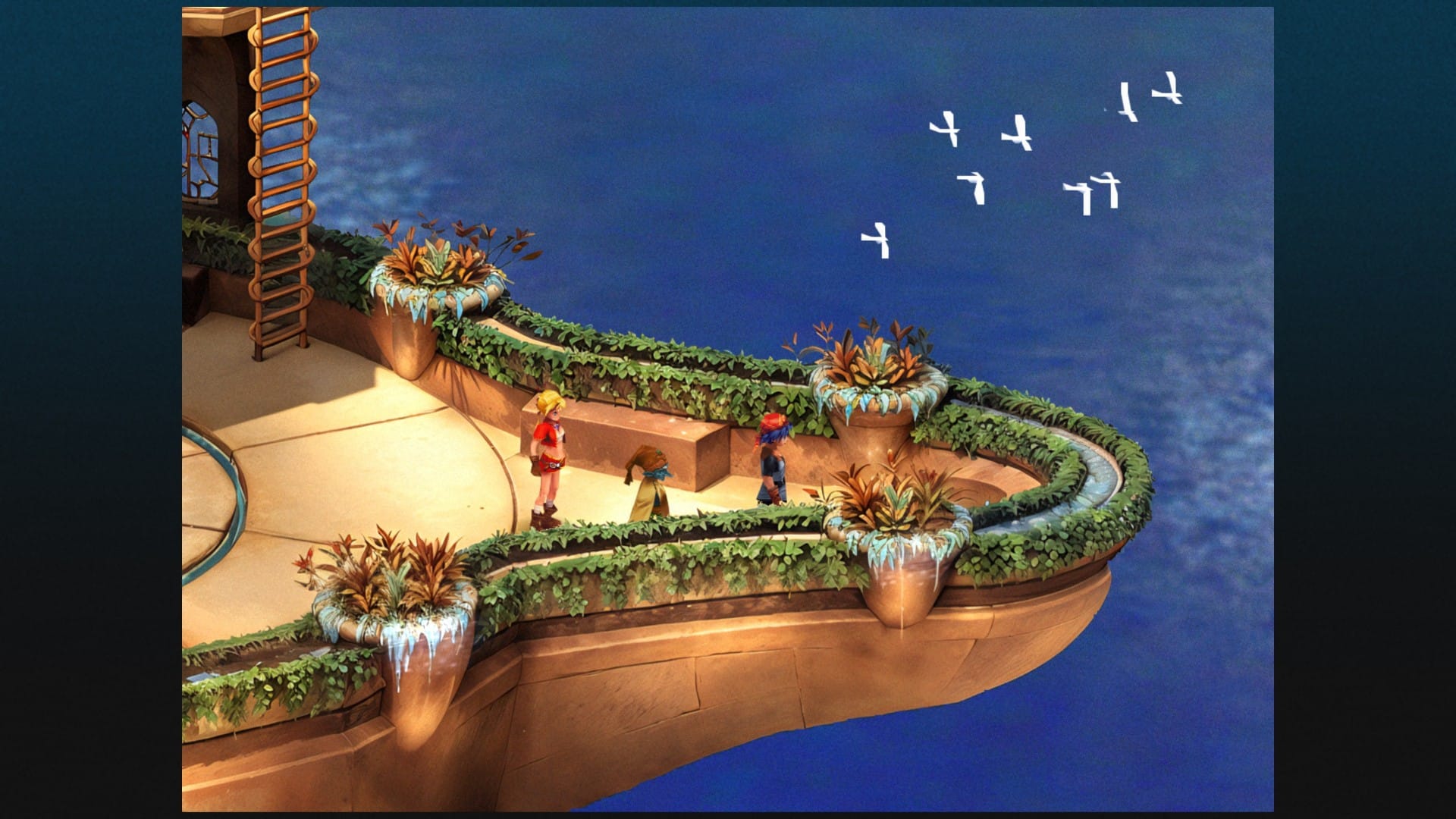
    Chrono Cross with HD Mod, characters Kid, Sprigg, Serge
    (All screenshots with Zeitgeist HD Background Upscale mod)

    First off, I want to get one thing out of the way. Radical Dreamers Edition is the definitive way to play in my opinion, but it does require some work. We’ll get into that in a bit.

    I had always heard that Chrono Cross was only loosely tied to Chrono Trigger, with only one or two sparse references. But that’s not really accurate. There was a lot more connecting the two games than I had expected, and some of it went pretty deep. Familiar names, familiar timelines, and a few characters from the original show up in unexpected ways. It really did feel like a sequel to me, even though the gameplay and style was fairly different. One of the biggest differences was in the writing style, which had a tendency to lean heavy handedly into full-blown existential dread sprinkled with a lot of multiverse confusion. It was a little too much at times, even for someone like me who enjoys that type of writing. You can feel the game reaching for something profound, and occasionally it lands, but a few times it just felt like it was trying to be too deep. I’m probably making this sound a little too negative, but bear with me.

    The character roster is also absurd, for better or worse. The 44 characters (excluding the permanent main protagonist) that you can add to your party seems overwhelming, especially when you realize some of the very specific actions you have to take to recruit some of them. Let alone the fact that some of those characters just aren’t that great. Overall, it’s more likely that you are going to find a few characters you like and stick with them through most of the game, which is pretty much what I did. Every once in a while you’ll have to swap them around if one of them leaves, or you have a task that requires a specific member to be in the active trio. Kid, Fargo, and Harle stood out as the more memorable team-mates, and there’s a good section of the story involving Nikki, though I somehow missed the chance to recruit him. The rest seemed more like background noise, at least in this playthrough. Some characters had their moments in the main plot, but usually too brief to make any major impact on me. But it’s extremely likely that I just missed bigger sections of their storyline. Take Sprigg for example, who I used frequently and can be very OP with her Dopplegang ability, but generally had that “Just someone I picked up along the way” vibe the entire time.

    Chrono Cross with HD Mod, Lynx in battle

    Combat takes some getting used to. It’s a weird blend of stamina management, elemental grids, and traditional JRPG flow. I collected some traps, but never used them due to the amount of pre-planning needed. I managed to launch a few summons, but the requirements to cast them were a bit of a pain. The best thing I learned was how to over-budget stamina by casting elements using the last point in an attack chain, which made combat way easier. If you haven’t played before, I’m sure that was all very confusing, and the game honestly does a terrible job of explaining itself. You’ll definitely want to look up some of the many tips and guides on Youtube.

    Difficulty-wise, Chrono Cross isn’t very hard. The standard enemies were usually easy, nothing felt unfair save for a few bosses that KO’d my entire party with a single spell cast (at full health I might add). I’ll admit that I did exploit the dodge-everything “enhancement” once to get past a particularly annoying boss, but I played it straight for the rest of the game. One thing I appreciated was the leveling system. It doesn’t force you to grind endlessly like a lot of JRPGs. What was odd was how you have hard caps between boss fights. I’m sure that annoyed some people, but for me, it wasn’t a bad thing. I feel like the game respected my time without letting me get too strong too early.

    The PC remaster got a lot of harsh reviews early on, and it’s honestly still a mixed bag. The newer character models look much better that the original PS1 versions, and the 60 fps battles are a huge improvement. But the backgrounds… yikes! Square-Enix tends to have a bad habit of using ugly-as-sin upscaling methods when they “remaster” an older title, and it certainly didn’t do this game any favors. Fortunately, you have things like the Zeitgeist HD Background Upscale mod, which used higher quality AI upscaling to make massive improvements to the visual quality. With that, the game actually looks like a proper semi-modern remaster.

    Visually, I still think the game has a ton of charm. A lot of people were upset that it didn’t have the art of Akira Toriyama like Chrono Trigger did. But instead they used Nobuteru Yūki for character design, another favorite artist of mine who worked on Record of Lodoss War, Battle Angel Alita, and Seiken Densetsu 3 (aka Trials of Mana). The characters in Chrono Cross are bright, expressive, and deceptively cheerful considering how dark the story writing could be at times. The environments are also rich and colorful thanks to art director Yasuyuki Honne. It’s one of those games that’s just beautiful to look at, even when it’s being emotionally devastating.

    Chrono Cross with HD Mod, AI enhanced pre-rendered background

    The music was also incredibly well written thanks to Yasunori Mitsuda, who also worked on the original Chrono Trigger with Nobuo Uematsu, as well as several other popular titles like Xenogears and the more recent Sea of Stars. There was a lot of variety between different areas throughout the game and various sections of the story. I did find it getting a little too repetitive during enemy encounters, but I suppose that’s to be expected with just about any JRPG.

    There are also some really cool quality-of-life features added in the Radical Dreamers Edition. Speed-up was great for cutting through long casting animations and backtracking through different areas, and auto-battle helped on those rare occasions where I actually needed to level grind on easier enemies. I felt like the whole experience was a lot better being able to quickly toggle those options on and off as needed.

    Getting everything stable, on the other hand, was a huge chore. After installing the HD background mod, the micro-stuttering issues increased to the point of being obnoxious. Several times early on I couldn’t even launch the game. At one point several hours in, the game started crashing to desktop every few minutes. After hours of searching through Reddit and Steam discussions I finally dug through my GPU settings and disabled every enhancement one by one. It took a lot of trial and error to figure out, and far more effort than I’d normally commit to. Fortunately, once it was fixed, it was fixed, and it ran smooth as silk ever since.

    Now that I’ve completed the first playthrough, I can say I’m glad I got through it. Much of that is because of how long it had sat unfinished in my backlog. To me there’s a lot of value in seeing a game through, even if the payoff isn’t life-changing. Chrono Cross is a strange, beautiful, and sometimes ‘too deep for its own good’ game. But it has charm for sure. It’s a step down in some ways from Chrono Trigger, a sideways leap in others. Where it does tie to its origins in Chrono Trigger, it does so in a similar way as The Force Awakens trilogy did with Star Wars (which I kinda hated, so maybe not a great example?). Chrono Cross aimed to be something different, and for that, I respect it, even if I didn’t love every minute.

    Would I recommend it? Sure. If you’re the kind of player who wants to see the full Chrono series conclusion, it’s worth the time. Just go in with the understanding that you’re not getting Chrono Trigger 2. Otherwise, the journey is still a worthy one. You’re getting something bolder, darker, and downright confusing at times. And sometimes, that’s okay.

  • Advance Wars 1 & 2: Re-Boot Camp: A Tactical Revival Done Right

    Advance Wars 1 & 2: Re-Boot Camp: A Tactical Revival Done Right

    Advance Wars 1 & 2: Re-Boot Camp – A Tactical Revival Done Right

    Advance Wars 1 & 2: Re-Boot Camp title image

    The original Advance Wars was a game I poured countless hours into back on the Game Boy Advance. It had that perfect mix of bright, inviting graphics, deceptively simple mechanics, and the kind of “just one more turn” pull that kept me up far too late on weeknights way back when. For those unfamiliar, Advance Wars is a grid-based strategy game that some would consider entry-level, but don’t let that make you think it’s lacking. It’s one of those games that reminds me of the old toy soldier wargames that I used to play when I was a kid. Just enough rules to make it easy to learn, and just complex enough to make it feel rewarding when you nail the right strategy. So, naturally, I was excited when Advance Wars 1 & 2: Re-Boot Camp was announced for the Nintendo Switch.

    I can say this without hesitation that it is everything I’d hoped for in a remaster.

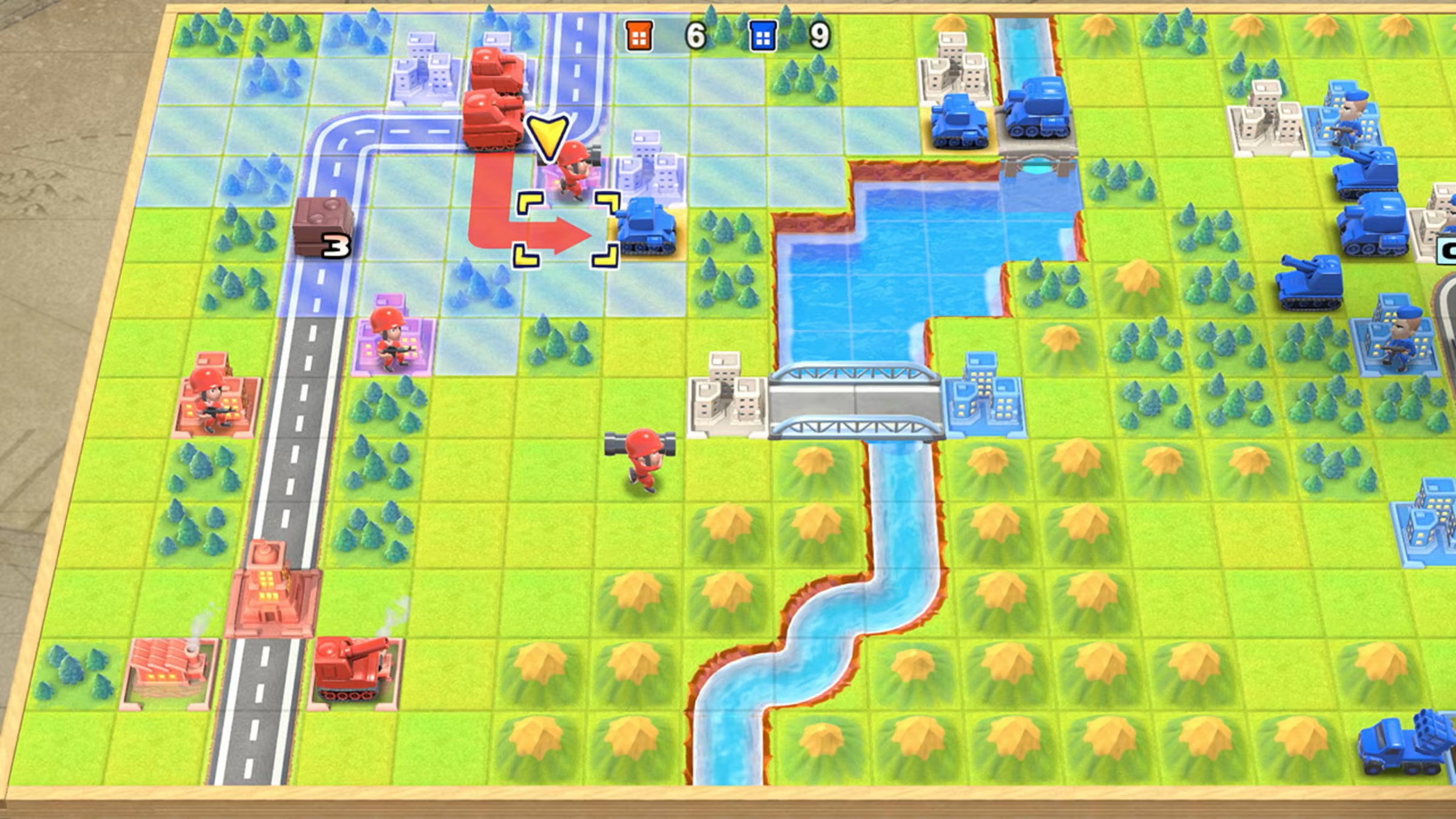
    Let’s start with what’s easily the most obvious change, that being the visuals. The original games had a charming, pixelated look that worked beautifully on the GBA’s tiny screen. Re-Boot Camp completely overhauls that with fully 3D models, dynamic lighting, and a crisp, almost toy-like aesthetic that somehow manages to feel both modern and completely faithful to the original.

    The units look like miniature figures on a tabletop battlefield, and it works so well. Tanks roll across terrain, infantry shuffle along like wind-up soldiers, and everything from forests to factories pops with color and detail. It’s playful, but also clean and easy to read in the heat of battle, something a strategy game like this absolutely needs.

    Even more impressive is how they’ve handled the Commanding Officers. The old static portraits are replaced with fully animated, expressive versions of the characters, and they’ve been given just enough flair to feel fresh without losing their original charm. It’s clear a lot of care went into making sure nothing here feels like a cheap modernization. This is a true visual remaster.

    Advance Wars 1 & 2: Re-Boot Camp encounter screen

    What really made me fall in love with Advance Wars all those years ago wasn’t just its looks. It was the gameplay. And I’m thrilled to say that the core tactical combat remains as rock-solid as ever.

    This is still the same highly addictive, grid-based strategy experience where you carefully maneuver units around maps, capture cities to fund your war effort, and try to outthink your opponent by controlling terrain and resources. Every unit has a specific role, and victory comes down to how well you can predict enemy moves while managing your own assets.

    Both campaigns from Advance Wars and Advance Wars 2: Black Hole Rising are included here, giving you dozens of missions packed with unique map layouts, varied objectives, and a steady drip-feed of new mechanics and units to keep things fresh. The difficulty curve feels just right, too. It’s challenging enough to make you think, but never so punishing that you want to throw your controller across the room… not that I’ve ever done that… #guilty (ᵕ-_-)

    One of the biggest surprises for me was just how snappy the game feels on Switch. Battles move quickly, loading times are minimal, and it’s easy to get into a rhythm that keeps you motivated mission after mission. This isn’t a game that wastes your time with bloat. It’s lean, efficient, and endlessly replay-able.

    Advance Wars 1 & 2: Re-Boot Camp mission map

    Beyond the campaigns, Re-Boot Camp also comes loaded with extras. There’s the War Room, which offers challenge maps to test your skills, and a map editor that lets you create and share your own battlefields.

    Online multiplayer is also here which offers a fun way to test your tactics against others. That said, I still think Advance Wars shines the most as a solo experience, taking your time and plotting out your strategy, just like the old days.

    Advance Wars 1 & 2: Re-Boot Camp isn’t just a nostalgia trip, it’s proof that great game design doesn’t age. The updated visuals are fantastic, the gameplay feels as sharp and satisfying as ever, and the package as a whole is overflowing with charm and content.

    If you’ve never played Advance Wars before, this is hands-down the best way to experience it. And if you’re like me, someone who still remembers the thrill of unlocking new COs and watching your carefully planned ambushes unfold on the GBA screen, this remake feels like right at home.

    Simply put, Re-Boot Camp is everything a remake should be: respectful, refreshed, and ridiculously fun.